A good spectrogram decoder workflow starts by deciding what is actually wrong with the file. Suno can produce tracks that feel finished at first listen, then reveal shimmer, humming, codec damage, stem bleed, or a chorus that falls apart under normal playback. The useful approach is patient and a little skeptical: protect the original export, test one problem at a time, and stop processing when the song becomes clearer rather than merely smoother.
A spectrogram image is not the original audio
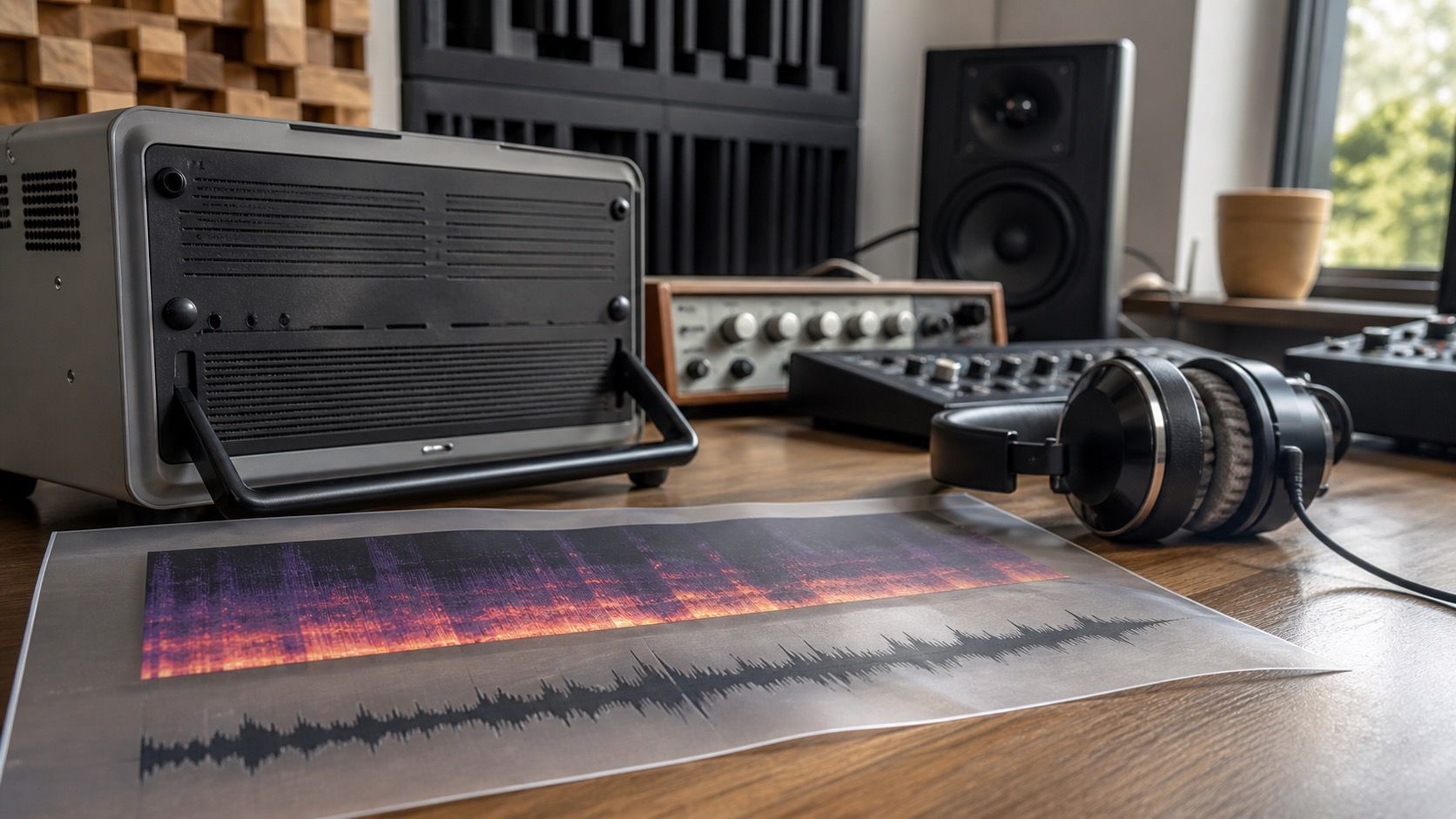
A spectrogram decoder works from an image-like representation, not from the original waveform. The missing phase information, limited resolution, color scaling, and display settings all affect what can be reconstructed. Perfect recovery from a flat image is not a realistic expectation.
The practical checkpoint is phase loss rather than a dramatic before-and-after claim. Connect the move to spectrogram decoder and check it beside image to audio, because the repair only matters if it helps the song outside a soloed fragment. Treat the display as a map for listening, not a verdict. A spectrogram can point toward high-band smear, codec cutoff, silent-tail noise, or transient blur, but the final question is still whether the song survives on real playback systems.
If that area gets worse after the move, step back before adding another processor. One small failed pass is easy to undo; three stacked fixes make it hard to know whether the problem came from the Suno render, the cleanup, the export format, or the final limiter. Compare one short section at a time. A ten-second chorus, a vocal entrance, a cymbal decay, and a silent ending give more useful evidence than staring at a full song compressed into a tiny screen. The detail is where bad repairs and bad exports reveal themselves.
Why phase matters for reconstruction
Decoder tools can approximate textures, sweeps, tones, and some experimental material. They struggle with full songs because the display was designed for analysis, not as a complete storage format. The reconstructed result often carries artifacts of the image and the algorithm.
The repair should be judged by resolution rather than a dramatic before-and-after claim. Anchor the move to audio reconstruction and check it beside text to audio spectrogram, because the repair only matters if it helps the song outside a soloed fragment. Use the same source file when testing repairs. If one pass starts from WAV and the next starts from MP3, the display will show format differences as if they were processing choices. That makes the comparison noisy before the audio even reaches the tool.
When the next pass makes the song smaller, undo it and return to the saved export. A single failed pass is easy to undo; three stacked fixes make it hard to know whether the problem came from the Suno render, the cleanup, the export format, or the final limiter. High frequencies deserve caution. AI shimmer, lossy encoding, noise reduction, and synthetic cymbal wash can all leave bright marks near the top of the display. Similar shapes do not mean the same cause, so the visual clue needs a listening check beside it.
What decoder tools can approximate
For audio restoration, start with the audio file. A spectrogram image can document a problem, but it is a weak source for repair. Keep decoder tests in the experimental lane and use them to learn what the display can and cannot represent.
A useful test is FFT window rather than a dramatic before-and-after claim. Match the move to frequency image and check it beside audio restoration, because the repair only matters if it helps the song outside a soloed fragment. Save notes beside screenshots. Write what you heard, where it happened, and which version was used. Without that context, a colorful image becomes easy to misread a day later, especially when several exports share almost the same title.
If the improvement only works in solo, check the full mix before committing. That failed pass is easy to undo; three stacked fixes make it hard to know whether the problem came from the Suno render, the cleanup, the export format, or the final limiter. Avoid uploading private or unreleased material to tools you do not trust. A local analyzer or plugin is slower to set up, but safer when the song belongs to a client, a release plan, or a collaboration that has not been shared publicly.
Why repair work should start from audio files
A spectrogram decoder works from an image-like representation, not from the original waveform. The missing phase information, limited resolution, color scaling, and display settings all affect what can be reconstructed. Perfect recovery from a flat image is not a realistic expectation.
The safest move is to listen for reconstruction artifacts rather than a dramatic before-and-after claim. Keep the move to phase information and check it beside image to audio, because the repair only matters if it helps the song outside a soloed fragment. Treat the display as a map for listening, not a verdict. A spectrogram can point toward high-band smear, codec cutoff, silent-tail noise, or transient blur, but the final question is still whether the song survives on real playback systems.
When the meter looks better but the chorus feels weaker, trust the playback check. The failed pass is easy to undo; three stacked fixes make it hard to know whether the problem came from the Suno render, the cleanup, the export format, or the final limiter. Compare one short section at a time. A ten-second chorus, a vocal entrance, a cymbal decay, and a silent ending give more useful evidence than staring at a full song compressed into a tiny screen. The detail is where bad repairs and bad exports reveal themselves.
How to use decoder tests safely
Decoder tools can approximate textures, sweeps, tones, and some experimental material. They struggle with full songs because the display was designed for analysis, not as a complete storage format. The reconstructed result often carries artifacts of the image and the algorithm.
The decision gets clearer around watermark myths rather than a dramatic before-and-after claim. Judge the move to spectrogram decoder and check it beside text to audio spectrogram, because the repair only matters if it helps the song outside a soloed fragment. Use the same source file when testing repairs. If one pass starts from WAV and the next starts from MP3, the display will show format differences as if they were processing choices. That makes the comparison noisy before the audio even reaches the tool.
If a second repair starts hiding the first one, print a reference and compare again. Any failed pass is easy to undo; three stacked fixes make it hard to know whether the problem came from the Suno render, the cleanup, the export format, or the final limiter. High frequencies deserve caution. AI shimmer, lossy encoding, noise reduction, and synthetic cymbal wash can all leave bright marks near the top of the display. Similar shapes do not mean the same cause, so the visual clue needs a listening check beside it.
Better ways to document audio problems
For audio restoration, start with the audio file. A spectrogram image can document a problem, but it is a weak source for repair. Keep decoder tests in the experimental lane and use them to learn what the display can and cannot represent.
A small but honest signal is analysis image rather than a dramatic before-and-after claim. Limit the move to audio reconstruction and check it beside audio restoration, because the repair only matters if it helps the song outside a soloed fragment. Save notes beside screenshots. Write what you heard, where it happened, and which version was used. Without that context, a colorful image becomes easy to misread a day later, especially when several exports share almost the same title.
When the source begins to sound polished but less believable, the process has gone too far. A repeated failed pass is easy to undo; three stacked fixes make it hard to know whether the problem came from the Suno render, the cleanup, the export format, or the final limiter. Avoid uploading private or unreleased material to tools you do not trust. A local analyzer or plugin is slower to set up, but safer when the song belongs to a client, a release plan, or a collaboration that has not been shared publicly.
Finish by playing the processed file from the start of the problem area into the next musical phrase. If the repaired version makes phase loss less distracting without weakening the vocal, drums, stereo image, or release loudness target, keep it. If the improvement only works while staring at a meter, go back to the saved original and make a smaller move.